Inclusion Criteria
Inclusion criteria define the conditions that patients must meet to be included in your cohort. These criteria are displayed in a section with a green border in the Cohort Builder interface, indicating their positive nature. You can add multiple criteria and group them together using logical operators (AND/OR) to create complex patient selection rules.

Understanding Inclusion Criteria
Inclusion criteria specify the characteristics, conditions, or events that patients must have to be part of your cohort. Only patients who meet ALL the inclusion criteria (or the specified combination when using groups) will be included in the final cohort.
Adding Inclusion Criteria
To add inclusion criteria to your cohort:
- Navigate to the Cohort Builder interface
- Locate the "Inclusion criteria" section (with green border)
- Click the "+ Add criteria" button to add a single criterion
- Or click "+ Add group" to create a group of criteria with logical operators
- Configure each criterion by selecting the appropriate data type and conditions
Types of Inclusion Criteria
You can use various types of criteria for inclusion:
- Patient Demographics: Patient, Gender, Age, Death, Race, State, Zip3, Segmentation, Patient History, Import Cohort Block
- Diagnosis: ICD-CM, ICD-CM Simple, ICD-CM Hierarchy
- Procedures: ICD-PCS, CPT-4, CPT-4 Simple, HCPCS
- Drugs/Medications: NDC, ATC Classes
- Laboratory: Result Name & Unit, LOINC
- Clinical Notes: Notes, Notes Cohort
Patient Demographics
Patient Demographics criteria allow you to include patients based on personal and geographic characteristics. These criteria are essential for creating targeted cohorts that match specific patient populations.
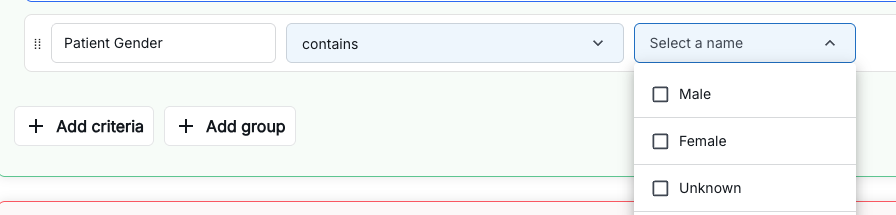
- Patient: General patient information and identifiers
- Gender: Include patients by gender (Male, Female, Other, Unknown)
- Age: Include patients by age ranges or specific age values
- Death: Include or exclude deceased patients
- Race: Include patients by race/ethnicity
- State: Include patients by U.S. state location
- Zip3: Include patients by first 3 digits of ZIP code (geographic region)
- Segmentation: Include patients by segmentation categories
- Patient History: Include patients based on historical patient data and events
- Import Cohort Block: Import inclusion criteria from existing cohorts
Diagnosis
Diagnosis criteria allow you to include patients based on ICD-10-CM diagnosis codes. You can use different views and selection methods depending on your needs.
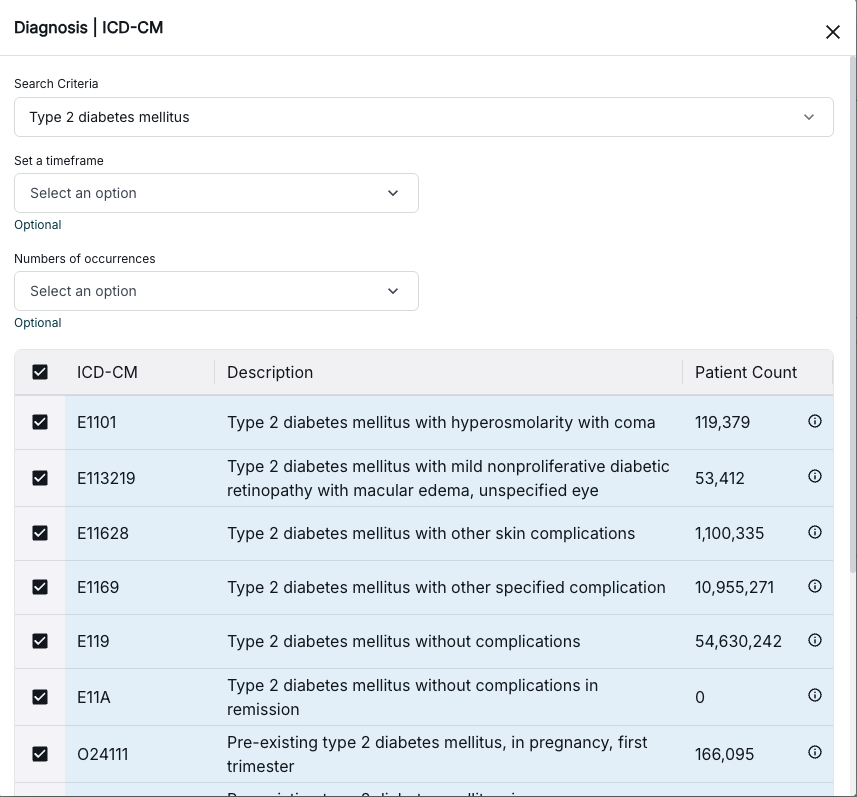
- ICD-CM: ICD-10-CM diagnosis codes with full functionality and advanced search capabilities
- ICD-CM Simple: Simplified ICD-10-CM code selection interface for quick code entry
- ICD-CM Hierarchy: ICD-10-CM codes organized in hierarchical structure, allowing you to select codes by category and subcategory
Procedures
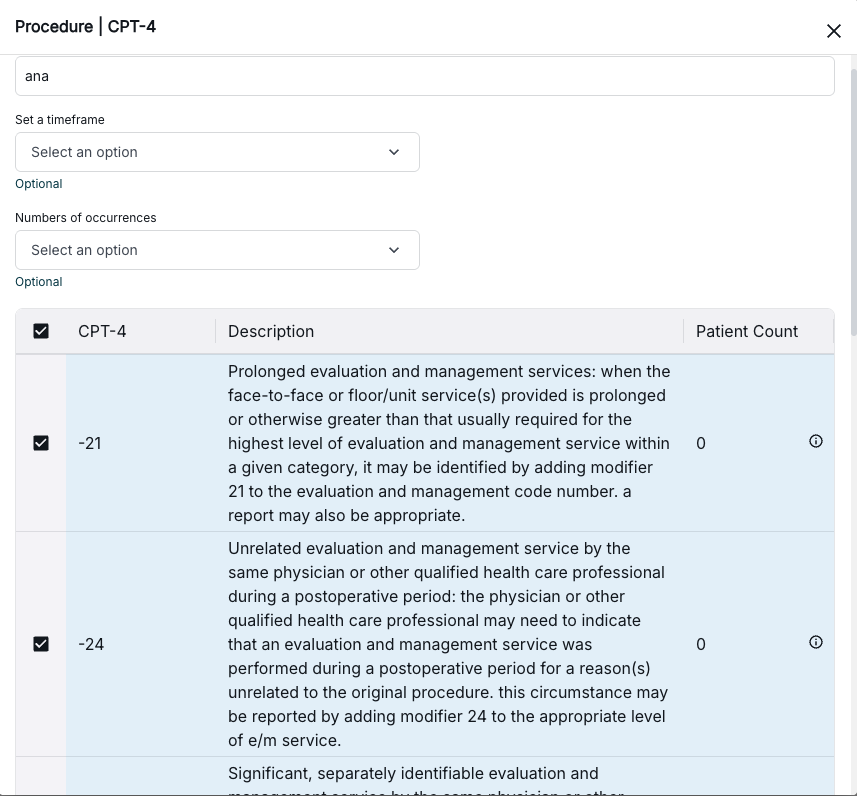
Procedure criteria allow you to include patients based on procedure codes. You can use different coding systems depending on your needs.
- ICD-PCS: ICD-10-PCS procedure codes for inpatient procedures
- CPT-4: Current Procedural Terminology (CPT-4) codes with full functionality and advanced search capabilities
- CPT-4 Simple: Simplified CPT-4 code selection interface for quick code entry
- HCPCS: Healthcare Common Procedure Coding System codes for medical services, supplies, and equipment
Drugs/Medications
Drug and medication criteria allow you to include patients based on medication codes and classifications. You can filter by specific drug codes or broader therapeutic classes.
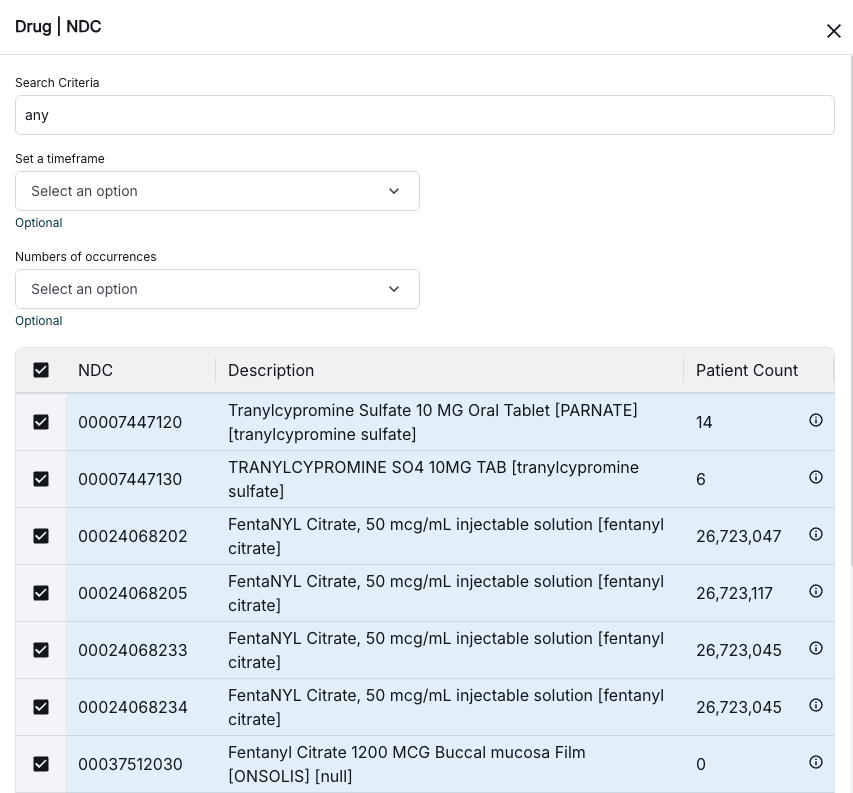
- NDC: National Drug Code for specific medications, allowing precise identification of individual drugs
- ATC Classes: Anatomical Therapeutic Chemical classification system for grouping medications by therapeutic and chemical properties
Laboratory
Laboratory criteria allow you to include patients based on laboratory test results. You can filter by test names and units or use standardized LOINC codes.
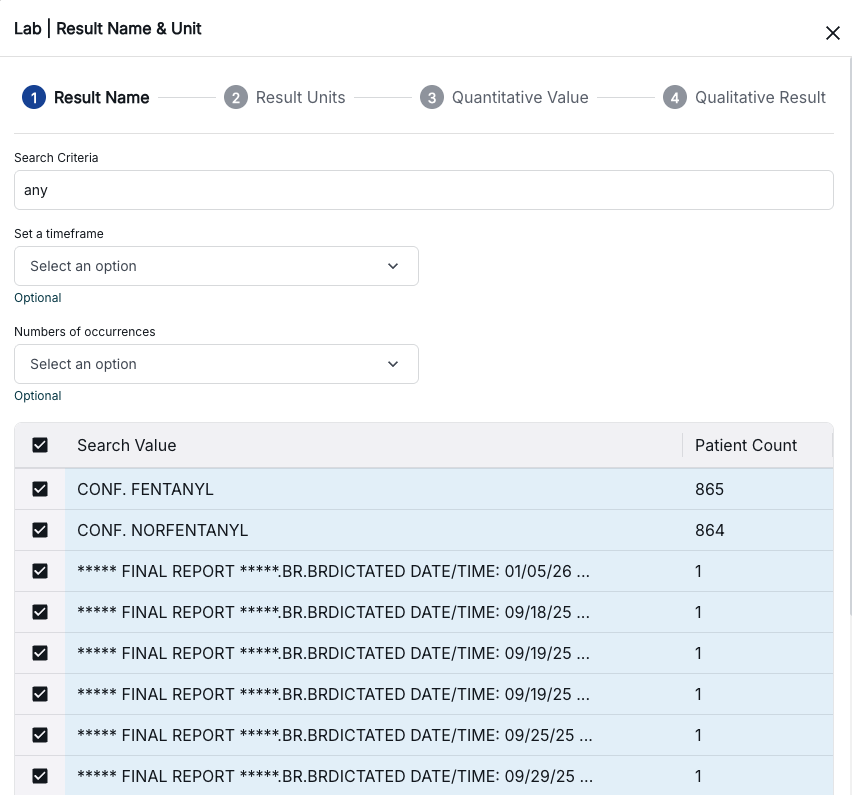
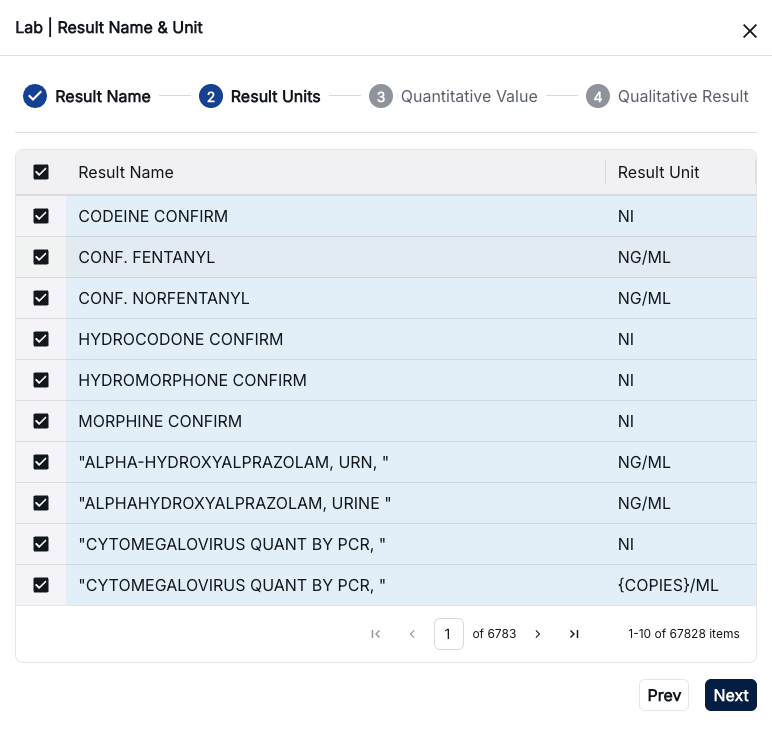
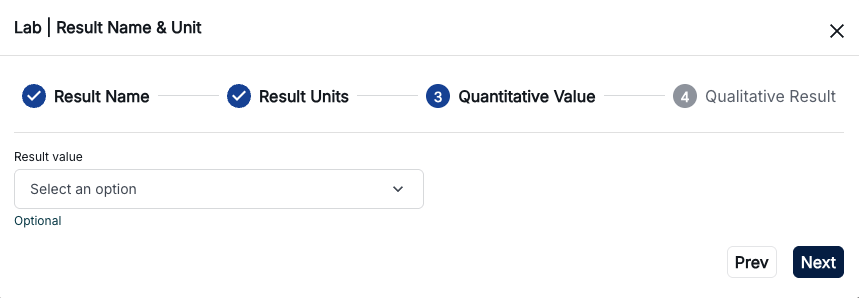
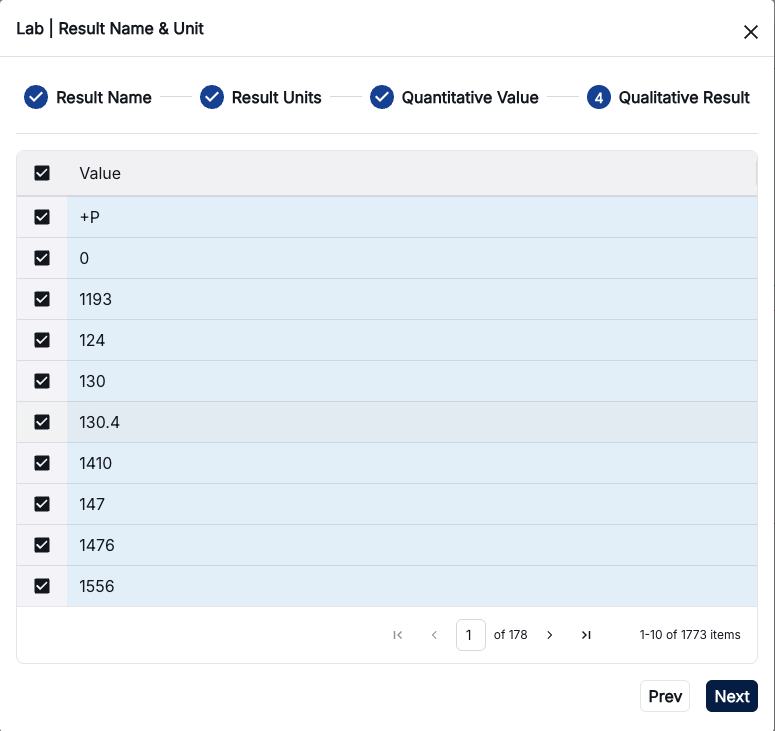
- Result Name & Unit: Laboratory test results filtered by test name and unit of measurement, allowing you to specify exact test parameters
- LOINC: Logical Observation Identifiers Names and Codes for standardized identification of laboratory tests and clinical observations
Clinical Notes
Clinical Notes criteria allow you to include patients based on Electronic Medical Record (EMR) notes and clinical documentation. You can search for specific text patterns or use cohort-based note filtering.
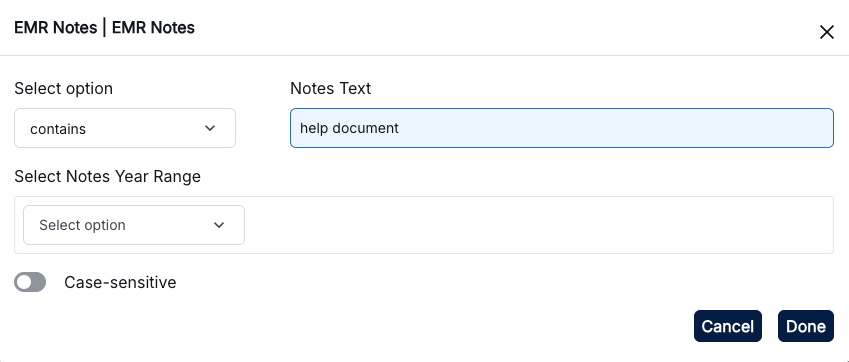
- Notes: Electronic Medical Record notes and clinical documentation, allowing you to search for specific keywords, phrases, or patterns within patient notes
- Notes Cohort: Cohort-based notes configuration and filtering, enabling you to apply note criteria within the context of a specific cohort
Grouping Criteria
You can create groups of criteria to build complex logic:
- AND Groups: All criteria in the group must be met
- OR Groups: At least one criterion in the group must be met
- Nested Groups: Combine multiple groups for advanced logic
Best Practices
- Start with broad criteria and refine as needed
- Use specific codes and values for more accurate results
- Test your criteria with small date ranges first
- Review the patient count after adding criteria to ensure expected results
- Document your criteria logic for reproducibility